
 ID
 EN
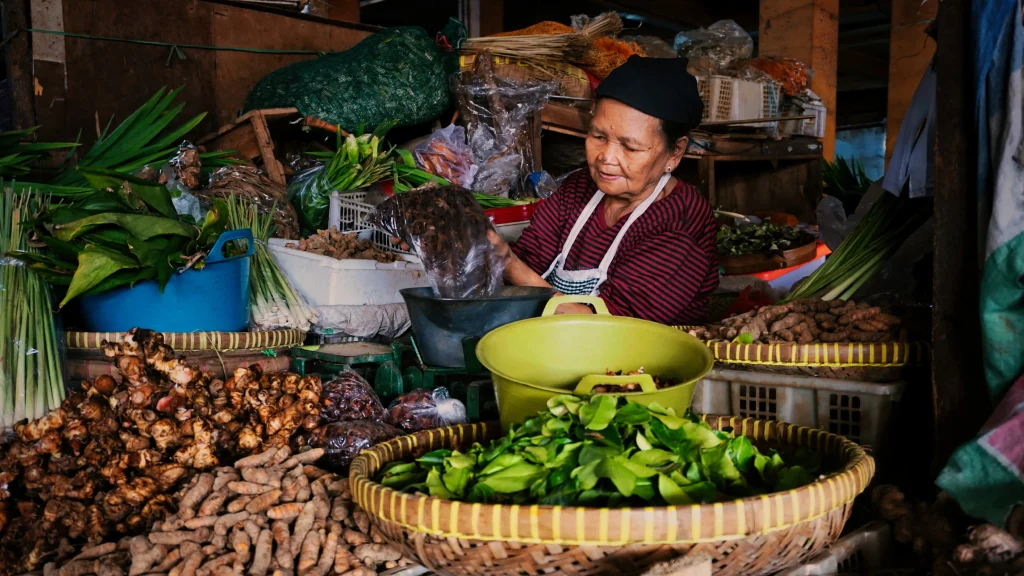
Our planet is aging, yet human needs continue to grow. Over time, we have developed technologies to make work faster, reduce physical effort, and meet our daily needs. However, despite these advances, one major challenge remains: how can we ensure that enough food is available and accessible to billions of people?
Food inequality persists in many parts of the world. In several regions, including parts of Africa, communities continue to face challenges in meeting their food needs. Governments, social organizations, and international institutions have introduced various programs to address these issues. Yet, the food challenge is not simply a matter of producing more food.
The Earth’s ecological condition also determines our ability to produce food. Climate change, environmental degradation, and climate phenomena such as El Niño can place additional pressure on food systems.
At the same time, human activities play a major role in shaping the Earth’s current condition. The global scientific consensus indicates that human activities are the primary driver of global warming, rather than natural factors (Lynas, 2021).
So, with a global population of around 8 billion people, how can we meet our food needs without placing even greater strain on the planet?
Stop Overexploiting the Earth
Imagine a mountainous region that has long been home to forests, water sources, food crops, and surrounding communities. Over time, the landscape changes due to the expansion of livestock farming, mining, or other extractive activities.
When nature is continually exploited to meet human needs, the loss goes beyond scenic landscapes. Ecosystems, water sources, biodiversity, and the livelihoods and living spaces of local and Indigenous communities can also be affected.
The problem is not simply that humans need resources. It arises when consumption and resource exploitation become excessive and unequal.
Hickel et al. (2022) found that 16% of the global population accounted for 74% of material use in excess of sustainable levels. This highlights how environmental problems are closely linked to unequal patterns of consumption.
Therefore, change cannot rest on individuals alone. We need policies and collective action to promote more sustainable production and consumption systems while ensuring that access to resources and food does not become increasingly unequal.
Promoting the Planetary Health Diet
If we want to feed billions of people while protecting the planet, we also need to pay attention to what we eat.
Conventional food production systems have a substantial environmental footprint. Stubbendorff et al. (2025) note that food production contributes approximately one-third of global greenhouse gas emissions, uses around half of the world’s habitable land, and accounts for 70% of freshwater withdrawals.
Dietary patterns also play a role. Animal-based foods, particularly ruminant meat, generally have a relatively high environmental impact, contributing to carbon emissions and pressure on ecosystems (Frank, 2024).
This is where the concept of the Planetary Health Diet becomes relevant.
This dietary approach encourages greater consumption of plant-based foods without requiring people to eliminate all animal products from their diets. Importantly, it can be adapted to the local foods and culinary traditions of different countries.
Eating more plant-based foods does not necessarily mean eating salads, oats, or foods that feel unfamiliar. Indonesia has tempeh, tofu, legumes, vegetables, tubers, and many other locally available plant-based foods.
In this way, dietary change is not only an opportunity to protect the environment but also a way to preserve local food diversity and culinary traditions.
Adopting the Planetary Health Diet may also help reduce diet-related emissions and ease pressure on land and water resources (Klapp et al., 2025; Fanzo & Miachon, 2023).
Prioritizing Local Food
Discussions about sustainable diets inevitably raise an important question: where does our food come from?
When forests, gardens, and local agricultural land are increasingly displaced by other activities, we lose more than food-producing spaces. Over the long term, dependence on supplies transported from distant locations can also create challenges for food systems.
That is why local food deserves attention at every stage, from production to the dinner table.
Consuming locally produced food can help support food systems that are more closely connected to communities and may reduce the need for long-distance transportation. However, distance is not the only factor determining a food’s carbon footprint. Production methods, food type, storage, and distribution also matter.
In other words, food produced nearby does not automatically have a lower environmental footprint.
This raises another question: how far can food travel and still be considered local?
There is no universal distance that defines local food across all countries and regions. A distance such as 161 kilometers should therefore be understood as one definition used in a particular context, rather than an absolute standard for determining whether food is local.
For consumers, supporting local food can begin with simple actions: choosing products from nearby farmers or producers, learning about foods grown in their region, and supporting businesses that develop local food products.
Governments and businesses also have important roles to play in strengthening local agriculture, urban farming, efficient food distribution, and public access to healthy and sustainable food.
Where Do We Begin?
Feeding 8 billion people is not simply a question of how to produce more food.
We must also ask: how can we produce and consume food without exhausting the resources that sustain our food systems?
Reducing excessive resource exploitation, strengthening local food systems, and encouraging dietary patterns that place greater emphasis on plant-based foods can all contribute to the solution.
And we can start with what is on our own plates.
One practical example is Meatless Monday, a movement that encourages people to reduce meat consumption at least one day a week and explore more plant-based food options.
This does not mean we have to transform our entire diet overnight.
Start with one day. One plate. One more conscious choice.
Feeding 8 billion people is not just about ensuring that everyone has enough to eat today. It is also about ensuring that the Earth can continue to provide food for generations to come.
Referensi
Fanzo, J., & Miachon, L. (2023). Harnessing the connectivity of climate change, food systems and diets: Taking action to improve human and planetary health. Anthropocene, 42, 100381. https://doi.org/10.1016/j.ancene.2023.100381
Hickel, J., O’Neill, D. W., Fanning, A. L., & Zoomkawala, H. (2022). National responsibility for ecological breakdown: A fair-shares assessment of resource use, 1970–2017. The Lancet Planetary Health, 6(4), e342–e349. https://doi.org/10.1016/S2542-5196(22)00044-4
Klapp, A.-L., Wyma, N., Alessandrini, R., Ndinda, C., Perez-Cueto, A., & Risius, A. (2025). Recommendations to address the shortfalls of the EAT-Lancet planetary health diet from a plant-forward perspective. The Lancet Planetary Health, 9(1), e23–e33. https://doi.org/10.1016/S2542-5196(24)00305-X
Lynas, M., Houlton, B., & Perry, S. L. (2021). Greater than 99% consensus on human caused climate change in the peer-reviewed scientific literature. Environmental Research Letters, 16. https://doi.org/10.1088/1748-9326/ac2966
Malik, A., & Li, M. (2022). Research: To protect the planet, wealthy societies should consume more local food and reduce food imports. The Conversation. https://theconversation.com/riset-demi-kelestarian-bumi-masyarakat-kaya-harus-perbanyak-konsumsi-makanan-lokal-dan-kurangi-pangan-impor-186126
Stubbendorff, A., Janzi, S., Jukkola, J., Morency, M., Zhang, S.-M., Borné, Y., & Sonestedt, E. (2025). Mini-review of the EAT-Lancet planetary health diet and its role in cardiometabolic disease prevention. Metabolism: Clinical and Experimental, 156373. https://doi.org/10.1016/j.metabol.2025.156373
