
 EN
 ID
Have you ever heard that polar ice and mountain glaciers contain microorganisms, including viruses and bacteria, that have been trapped for thousands of years? Ice is often referred to as a natural time capsule. As it melts, the microorganisms stored within it may become exposed to the environment again. However, this does not mean they will immediately become active, spread, or infect humans. The potential risks of transmission still require further research.
This phenomenon reminds us that environmental changes can have consequences for human health. The same concern applies when forests are damaged. Forests do more than absorb carbon and provide habitats for wildlife; they also play a vital role in maintaining ecosystem balance.
When forests burn, become fragmented, or are converted for other purposes, the relationships between humans, wildlife, and the environment can also change. So, how can changes in forest ecosystems affect the risk of disease transmission?
When Forests Are Damaged, Ecosystem Balance Is Disrupted
Ironically, despite being blessed with vast tropical forests, Indonesia continues to face threats from deforestation, land-use conversion, and forest and land fires.
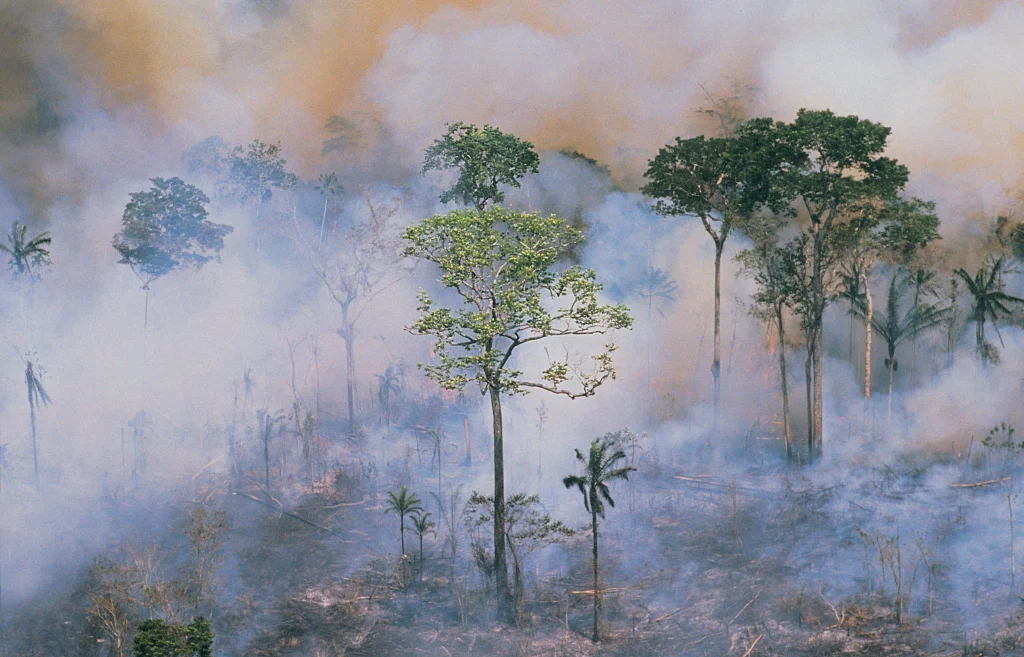
According to data from Indonesia’s National Disaster Management Agency (BNPB) as of November 3, 2026, more than 2,800 hectares of land had been reported burned, with incidents recorded across six provinces in Indonesia. These fires not only damage forest cover but also threaten the natural habitats of various wildlife species. Some animals may move in search of shelter and new food sources, while others may not survive.
As habitats become increasingly limited or fragmented, interactions between humans and wildlife may increase. This can happen, for example, when human activities expand further into forest areas or when wildlife moves closer to residential areas and agricultural land. Such conditions may increase opportunities for contact with animals carrying pathogens that can potentially cause zoonotic diseases, which are diseases that can be transmitted between animals and humans.
From Forest Destruction to Changes in Disease Risks
The health impacts of forest destruction are not limited to zoonotic diseases. Forest fires, for instance, produce smoke and pollutant particles that can reduce air quality and increase the risk of respiratory problems, including acute respiratory infections (ARI).
Meanwhile, changes in landscapes can also affect patterns of interaction among wildlife and between animals and humans. Gilbert (2022) found that human activities can restrict wildlife movement and increase the frequency of encounters between animals by up to 33% in fragmented landscapes. These changes in interactions deserve attention because they can influence the dynamics of pathogen transmission.
One example is how environmental changes can affect the habitats of disease vectors, such as malaria-carrying mosquitoes. Several studies have also linked land-use changes to shifts in the risk of diseases such as leishmaniasis and hantavirus (Chen, 2015). In the Amazon region of Brazil, deforestation and forest fires have also raised public health concerns due to their association with various health problems, ranging from malaria and leishmaniasis to respiratory and cardiovascular conditions.
So, how can zoonotic diseases be transmitted to humans? In general, there are several transmission pathways to be aware of.
First, direct contact, such as through bites, scratches, or exposure to bodily fluids from infected animals, including blood, saliva, urine, and feces. Second, indirect contact, which occurs when someone touches objects or environments contaminated with pathogens, such as animal enclosures, soil, or food and water containers.
Third, consumption of contaminated food, such as meat or eggs that have not been properly cooked, or fruits and vegetables exposed to the feces of infected animals. Fourth, exposure to contaminated water, which occurs when someone uses or consumes water containing pathogens originating from infected animals.
These various transmission pathways show that zoonotic disease risks are not solely related to the presence of wildlife. They are also influenced by sanitation, food safety, water quality, and environmental conditions. Therefore, efforts to protect human health must take the overall condition of ecosystems into account.
Human Health Is Inseparable from Nature
This is where the One Health approach becomes relevant. It recognizes that human, animal, and environmental health are interconnected and cannot be addressed independently.
Its implementation can begin with protecting forests and wildlife habitats, monitoring diseases in both humans and animals, and strengthening infectious disease surveillance systems in vulnerable areas. Collaboration among the health, forestry, environmental, and community sectors is also essential to identify and anticipate potential risks at an early stage.
This means that disease prevention cannot rely solely on medical treatment after someone becomes infected. Ecosystem management, habitat protection, and environmental health monitoring must also be integral parts of public health strategies.
Ultimately, protecting forests is not merely a conservation agenda or an effort to save wildlife. More importantly, it is an investment in public health. By keeping nature healthy, we also protect the living environments and ecosystems that sustain human health.
References
Alodokter. 2024. Understanding Zoonoses: Diseases Transmitted from Animals to Humans.https://www.alodokter.com/memahami-zoonosis-penyakit-yang-menular-dari-hewan-ke-manusia
BNPB. 2026. Forest and Land Fire Management Information. https://data.bnpb.go.id/data/karhutla2026
Chen, S. 2015. Impacts of Deforestation on Vector-borne Disease Incidence. Journal of Global Health.
Gilbert, N. A., Stenglein, J., Pauli, J., & Zuckerberg, B. 2022. Human disturbance compresses the spatiotemporal niche. Proceedings of the National Academy of Sciences of the United States of America, 119.https://doi.org/10.1073/pnas.2206339119
